Saturday, 21 September 2019

Treason: Does India requires such law at present ?

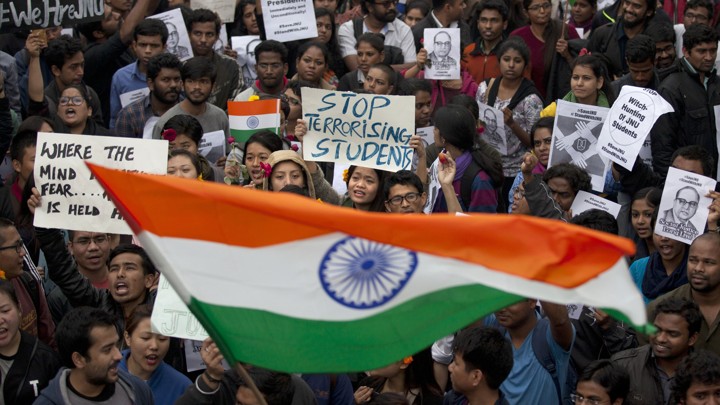
As we all know that no one is above Constitution in India. Whenever any person violates law and constitutional norms or does anything against the Country, he/she is not only arrested but given punishment. This act against nation comes under the ambit of Treason. We are listening to the term treason since British era. Britishers made law of treason for their own purpose. This act was made punishable under section 124A of Indian Penal Code. Britishers had misused this law to arrest freedom fighters and nationalists. Because of this misuse, this law has been questioned many times. Even after independence, there were voices for and against this law. 

Even today this law has punishments and provisions made by Britishers. So whenever any matter of Treason comes, the efficiency of law is questioned. Those who are against this law often say that this law is misused by the Government and this law contradicts the freedom of speech. On the other side Government's stand is very clear. It is, this law is required to act against terrorism, separatism and to stop anti national movements. Section 124A of IPC came into existence in 1870. This question is always raised that after so many years of independence why this law is required. Experts of law has said that in Constitution, Freedom of Speech is not absolute right. It is right with certain restriction that is why this Treason law is not required at present. In IPC also there is already punishment for hate speech, etc. then is Draconian law is not at all required. Supreme Court has also said that if anyone says something against the Government then he/she should not be punished under section 124A. 

The definition of Treason is very vast and that is why there are chances that this law may be misused. To make sure justice is delivered there is provision under section 196 Cr.P.C which says that police has to take permission from Central or State Government in order to proceed with the trial of Treason case. No Court shall take cognizance of the matter until the permission from Central or State Government is granted.

History of Treason law:
In every form of Government, the voices against it is considered as an offence. In Ancient India this law was present. In Modern India this law came in codified form by Britishers. In 1837 the first Law Commission headed by Lord Macaulay proposed this law. Then it was drafted and under section 113 law against treason was made. When Indian Penal Code was drafted this law was not inserted in that. In 1870, Section 113 was removed and a new section 124A was inserted. This law was misused by Britishers against freedom fighters and time to time its scope was increased and many things were inserted into its ambit.

Supreme Court view on section 124A of IPC
Supreme Court has limited the scope of section 124A in the case of Kedar Nath Singh v. State of Bihar, 1962. Supreme Court has said that this section can be invoked only when the act of violence is caused or there is grave possibility that the act of violence may be caused. Supreme Court has also said that people have right to criticize the Government  and its policy. This section cannot be invoked unless the means of violence is opted.

In 1995, Supreme Court in the case of Balwant Singh V. State of Punjab has said that section 124A cannot be invoked on the mere act of sloganeering by Public. 

Tuesday, 17 September 2019

Standing Committees of Parliament

In a democratic country, the work of Legislature is very important. In 90s, Standing Committees was established for effective and smooth functioning of the Parliament. These committees plays excellent role in organising the work of legislature in effective manner. These Standing Committees can be called Mini Parliament and their work is dedicated to harness the gap between common people and the Government. These committees check the laws made by Parliament and if required suggest necessary changes in that law. These committees takes public opinion into consideration as well as the advices of expert. They make sure that law should not have any adverse effect on the society. Recently new Standing Committees are set up and Members of the Parliament have been assigned new responsibilities. On September 13, 2019 Lok Sabha Secretariat has notified all 24 Committees of the new changes. BJP MPs have been assigned responsibility of 13 Committees and Congress MPs have been assigned responsibility of 3 Committees. These committees are supposed to keep an eye on the work of executive and to reduce the excessive work load of the Legislature. Anti Defection laws are not applied on these committees. This is reason behind the independent working of these committees. These committees are expected to work above party politics. Standing Committees were established in 1993. The tenure of Head of each committee is 1 year. Lok Sabha has 16 Standing Committees and Rajya Sabha has 8 Standing Committees. Till 13th Lok Sabha there were 45 members in which 30 were from Lok Sabha and 15 were from Rajya Sabha. In 2004, this structure was changed and total number of members was 31. In this 21 were from Lok Sabha and 10 were from Rajya Sabha. At present total number of Standing Committees are 24 in which 16 members are appointed from Lok Sabha and 8 members are appointed from Rajya Sabha. Lok Sabha Standing committee members are appointed by Speaker of Lok sabha and members of Rajya Sabha Standing Committee are appointed by Chairman of Rajya Sabha.

Financial Committees:
There are 3 types of Financial Committees namely Estimate Committee, Public Accounts Committee and Committee on Public Sector Undertakings.

Estimate Committee: In Estimate Committee there are 30 members. All members of the committee are Lok Sabha MPs. The tenure of the committee is 1 year. This committee works on effectiveness of policy and the areas where Government need to spend money.

Public Accounts Committee: In Public Accounts Committee total number of members are 22 in which 15 are from Lok Sabha and 7 from Rajya Sabha. The tenure of this committee is 1 year. From 1967, there is tradition to appoint leader from opposition to be head of this committee. This committee works on the report of Comptroller and Auditor General of India.

Committee on Public Sector Undertakings: This committee also has 22 members, 15 from Lok Sabha and 7 from Rajya Sabha. The tenure of this committee is 1 year. The head of the committee is appointed on advice of Speaker of Lok Sabha. This committee work on the functioning of Government Companies.

There are some special committees formed from time to time for specific purpose. These committees are known as Ad Hoc Committees. These committees comes into existence by special motion and subsequently dissolved when work is done. This is not permanent Committee.  

Saturday, 14 September 2019

Super Earth is located about 110 light years away.

Space seems to be flavour of season these days and it is not India's moon mission Chandrayaan 2 alone that is keeping the interest alive in humanities final frontier. Astronaut have learnt of an exciting finding, a research report in the journal "Nature Atmosphere" says something has been found in atmosphere of planet orbiting a distant star outside our solar system. This planet has Earth like temperature that could support life called K2-18b. It is eight times the mass of earth and now it is only exoplanet known to have both water and temperature that could be potential for habitat known as Super Earth. In an incredible exciting findings  Astronauts discover water in a planet outside the solar system that has temperature suitable for life. According to the study water vapour has been detected on Super Earth known as K2-18b located about 110 light years away in constellation Leo. Details were published in the scientific journal named "Nature Astronomy" by university college London team. K2-18b is classified as a Super Earth because it is bigger than earth. The exoplanet was first spotted in 2015 by NASA's Kepler spacecraft. An analysis of data has revealed new details that has not been seen on Super Earth before. The study reveals that new planet sits in star's habitable zone where it is based in same amount of energy from star as Earth gets from Sun. K2-18b has temperature cool enough to have liquid water between 0 and 40 degree Celsius. It also possesses powerful gravity.

How the test has been conducted ?
The Transiting Exoplanet Survey Satellite test is next step in the search of planet outside our solar system including those that can support life. The mission is looking for exoplanet but it is surveying 2 lakhs of the brightest star near the Sun. It has discovered 21 planets outside our solar system so far and captured data on other interesting events occurring in the southern side. Test was launched on April 18, 2018. It began its work in July 2018 in the southern sky. The satellite is surveying the entire sky over the course of its mission life by breaking it up into 26 sectors, each 24 degrees by 96 degrees across. The powerful camera onboard the spacecraft stair at each sector for at least 27 days. Test is concentrating on stars closure than 300 light years from our solar system. The Transit method looks for dips in visible light of stars, if planet cross along our line of sight. Repetitive, periodic dips can reveal a planet or planets orbiting a star. Transit photometry which looks at how much light and object put out at any given time, it can tell researchers a lot about planet. Based on how much of a dip in light a planet causes, we can determine its size. It also helps in determining shape of planet's orbit, how long it takes planet to circle its Sun.

Friday, 13 September 2019

NASA is sending HELLO messages to Chandrayaan 2


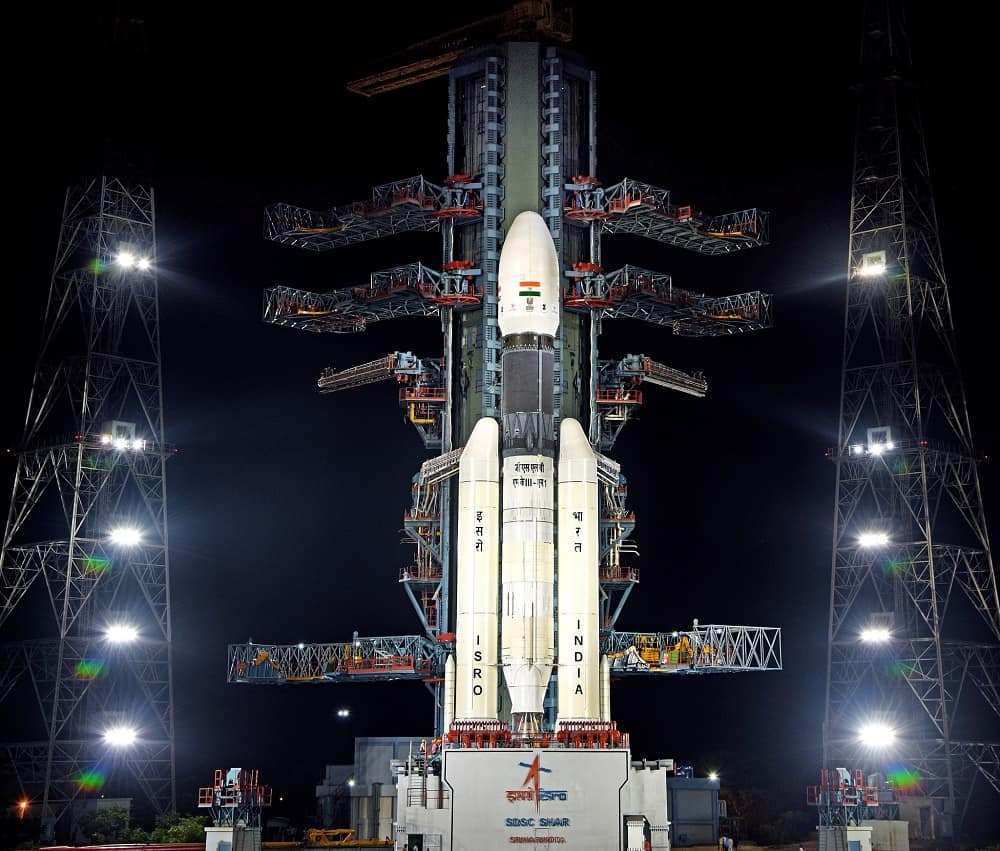
NASA has joined ISRO in attempting to gather response from Chandrayaan 2 lander VIKRAM that lies motionless on the moon. The connection between the orbiter and VIKRAM lander snapped on the early hours of September 7 when ISRO has planned its soft landing on the Lunar surface. For over 4 days now ISRO has been trying to establish communications with moon lander VIKRAM. Even all methods to establish communications has proven unsuccessful. ISRO feels there is one way to connect lander through "X BAND". X BAND is band of frequencies in microwave radio region of electromagnetic spectrum. It is used for radar, satellite communications, wireless computer networks. In space communications X BAND is allocated for deep space telecommunications. Following this development NASA has sent HELLO messages to the Indian lander on moon. Through its deep space network stations, NASA Jet Propulsion Laboratory beaned a radio frequency to VIKRAM in order to establish contact with lander.

Communications to Chandrayaan 2:
ISRO has also taken help of NASA DSN to track Chandrayaan 2 integrated modules while it was on its way to moon from Earth's electrical orbit. The orbiter is designed to communicate with ISRO's and NASA's DSN antennae. The lander VIKRAM was also designed to communicate directly with Earth and it is capable with communicating with the orbiter which in turn can relay its messages to Earth. The lander can also relay images taken by Rover to ISRO's and NASA's DSN. However, during the final minutes of Vikram's dissent, communications froze about 400 meters before its land on Lunar surface. The hope of reviving lander Vikram is till the day when 14 Earth day will get over on 20th to 21st September. After which the lander will no longer remain exposed to the Sun's rays and hence there would be no hope to energize the solar panel.

Chandrayaan 2, The Journey: On September 2, Vikram successfully separated from Chandrayaan 2 orbiter following which two de-orbiting manoeuvres were performed to bring it closer to the moon. On September 7, it successfully completed Rough Braking phase but lost communications with the ground stations during Fine Braking Phase.

What is Deep Space Network or DSN ?
In simple terms Deep Space Network or DSN is communication hub for deep space explorations. It is Giant radio antennas support inter planetary space craft mission. It also provides Radar and Radio astronomy observations that improve understanding of solar system and larger universe. Deep Space Network is powerful system to command, track and monitor the health and safety of space craft. The antennas of DSN has indispensable link to planetary beyond earth. They provide crucial connections for commanding space craft receive their scientific information on earth. The DSN  acquires, processes, decodes and distributes telemetry data that is made up of crucial science and engineering information transmitted to earth via radio signals from space craft. Space mission use DSN command system to control activities of space craft. Commands are sent to the robotic probes as coded computer files that the craft execute as series of action. DSN tracking system provides two-way between Earth and Space craft making measurements that allow flight controller to determine the position and velocity of space craft. DSN antennas are used by space mission to perform experiments using the radio signals sent between a space craft and earth. NASA's deep space network is the world's largest and most sensitive scientific telecommunication system which provide round-the-clock coverage of solar system.

History of Deep Space Network :
The deep space network was conceived by NASA as worldwide  telescope array that could communicate with space craft throughout solar system. The Forerunner of deep space network was established in January 1958. The Jet Propulsion Laboratory was under contract with US Army deployed portable radio tracking stations in Nigeria, Singapore and California. When the US Army successfully launched its first satellite Explorer 1, these stations received telemetry and helped mission controller plot the space craft's orbit. In October 1958, NASA was officially established to consolidate the separately developing space exploration programmes of the Army, Navy and Air Force into one civilian organisation. On December 3, Jet Propulsion Laboratory or JPL was transferred from Army to NASA and given responsibility of design and execution of Lunar and Planetary exploration programmes using robotic space craft. Shortly afterwards, NASA established Deep Space Network as a separately operated communications facility that could accommodate all deep space missions. The DSN was given responsibility for its own research, development and operations. 1963 was DSN's first year of operation during which it communicated with three space craft. As of 2013, the DSN communicated with 33 space craft across the solar system.

Indian Deep Space Network :
More than a decade ago, India's Chandrayaan 1 space craft successfully conducted the country's first lunar mission. On July 22, 2019 India launched Chandrayaan 2 to explore the moon's south pole region. Unlike most other moon mission Chandrayaan 2 travels nearly 30 days before ejecting itself to the moon's orbit. However, ISRO lost communication with Vikram lander just some distance away from the lunar space. But ISRO is trying its level best to establish communications with Vikram lander. Many Government entities located in Bangalore are monitoring the mission from the ground. For example, antennas are the Indian Deep Space Network or IDSN was set up to receive Chandrayaan 2 data and information. ISRO is now trying to communicate lander through IDSN. IDSN is network of large antennas and communications facilities to support the inter planetary space craft mission of India. It consists of 3 antennas, 11 meter antennae, 18 meter antennae and 32 meter antennae. Its hub is located at a village near Bangalore and Karnataka. Indian Deep Space Network was inaugurated on 17th October 2008. The first 18 meter antennae of IDSN was built to track India's first Lunar mission Chandrayaan 1 and the unmanned lunar launched on 22 October 2008. The 32 meter antennae of IDSN is tracking ongoing Mars orbiter also known as Mangalyaan. The IDSN facility also houses the ISRO's navigation centre. The centre became active on 11th June 2013 at the time of launch of IRNSS 1A, the first of the India's Regional Navigation Satellite System Series of Satellite. It will be used to coordinate across the 21 ground stations in India.

Thursday, 12 September 2019

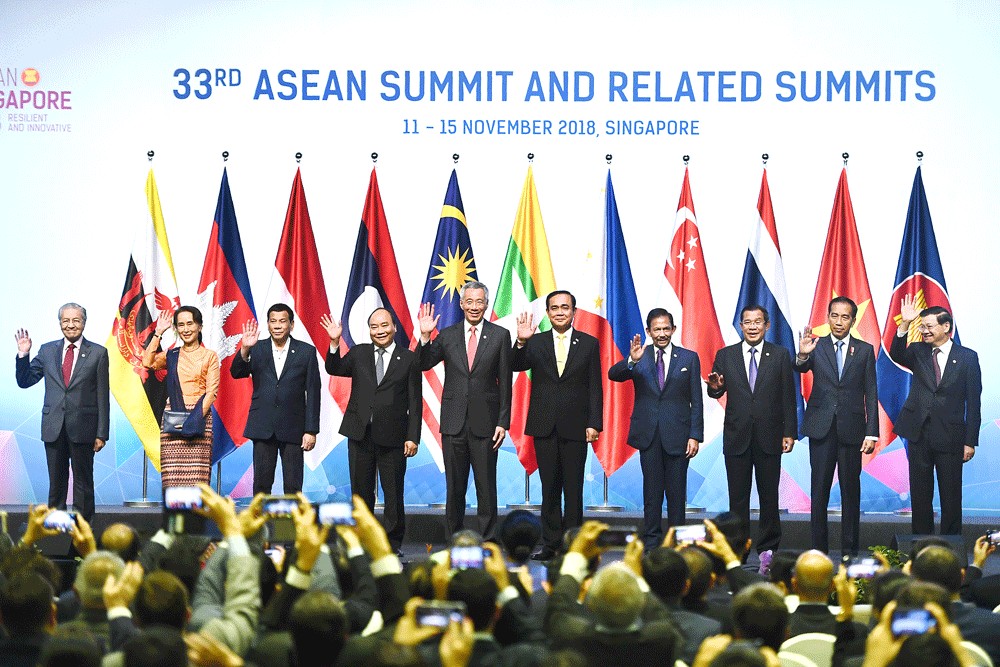
India and ASEAN FTA


India and 10 members ASEAN  countries have agreed to initiate the review of bilateral free trade agreement of goods to make it more user-friendly, simple and trade facilitative. India is not happy about the fact its Trade Deficit with ASEAN has wide and significantly since the pact was implemented in January 2010. The Niti Aayog study reveals that India trade deficit with ASEAN doubled to 10 billion US dollars in 2017 from 5 million in 2011. A review of India ASEAN FTA could help in improving utilization by making the pact simpler and user-friendly. India has managed to push the ASEAN members to review the FTA  pact.

Political Aspect of ASEAN FTA: Trade is major key of relationship with any contry around the world. India's Trade with ASEAN is very fundamental in order to promote our policies like Look East, Act East. It is important for overall National interest like availability of goods, employability, GDP growth. The ASEAN market is exteremly important for India. It involves 10 countries and 1.8 Billion dollar worth market. All the south-east ASEAN countries are following export led growth.

Changes India should expect if the pact is reviewed: The review should seek the balance between endowments, free trade area, simplifying the agreement and making it user-friendly. There are complexities in regulatory mechanism, it should be flexible. The negotiating barriers should be more transparent which will give room to more export and import. A better connectivity and infrastructure is required for better trade policy and promotion.

Impact of USA and China trade war over ASEAN FTA: The repercussion of this was between USA and China has been felt across the Globe, India and ASEAN are no exception to that. Given the fact that most of the developed countries of World is in a kind of recession and the growth has not been so good. Asia continues to be engine of growth to the world economy. This is very appropriate that inter-regional trade between the ASEAN Countries should be kept out of the impact what China and USA are doing amongst them.

Friday, 6 September 2019

India in Travel and Tourism Competitive Index

India has made tremendous progress in tourism in last few years. In just 2 years India has moved up its rank in World Travel and Tourism Competitiveness Index. It is the biggest improvement among the top 25% of all countries rank in the report over 2017. In the list of top 35 tourist destination China, Mexico, Malaysia, Thailand, Brazil and India stand up their performance in terms of their tourism potential in the region. From heritage to Nature and Culture, India offers an infinite variety of things to do that no other country can offer.


What is India's Ranking in Travel and Tourism Competitive Index ?
India is now ranked 34th on the world travel and tourism competitiveness index. A world economy forum report says India has got 34th rank driven by rich natural resources. India's ranking jumped from 40th to 34th, which is the greatest improvement over 2017 among the top 25% of all countries ranked in the report. India accounts for the majority of South Asia's  travel and tourism GDP and the sub region is the most competitive travel and tourism economy. The report also says that India is only lower middle income country in the top 35.

Why India has got rank in Travel and Tourism Competitiveness Index ?
For sub regional perspective, India has better Air infrastructure ranked at 33, Ground and Port infrastructure ranked 28. International openness ranked 51, Natural resources ranked 14 and Cultural resources ranked 8. India's price competitiveness ranked 13. Other factors that have enabled India to improve its ranking is its Business Environment that has moved out from 89th to 39th. Overall travel and tour policy and enabling conditions has moved out from 79th to 69th. Infrastructure that has gone up 58th to 55th. Information and communication technology readiness that has improved from 112th to 105th.
However, there are areas still that India needs to work upon which includes enabling environment, tourist service infrastructure and environmental sustainability.

What are other Countries' ranking ?
The travel and Tourism competitiveness index ranks Spain on the top spot followed by France, Germany, Japan, USA is in the top five. The United Kingdom has moved to 6th place, Australia is at 7th, Italy, Canada and Switzerland round up the top 10. The report says that Asia-Pacific was one of the fastest growing travel and tourism regions in this year. In the region Japan is most competitive travel and tourism economy while China is largest travel and tourism economy and 13th most competitive globally. Pakistan has ranked 121; is the least competitive country in South Asia when it comes to travel and tourism. Pakistan has ranked least favourable in safety and security conditions.

What is Travel and Tourism Competitiveness Index methodology ?
The World Economic forum releases the Travel and Tourism Competitiveness Index. It measures factors and policy that make a country viable place to invest in tourism sector. It also utilizes four sub-indices to represent the overall quality, future potential and long term sustainability of the tourism sector within each country. For its latest survey the index rank 140 countries across 14 dimensions within the four sub-indices that include an Enabling environment, Travel and Tourism policy, Infrastructure, Natural and Cultural resources. These sub-indices are further composed of 14 pillars of competitiveness that includes Business environment, safety and security, health and hygiene, human resource and labour market, prioritization of travel and tourism, International openness, price competitiveness and Air transport infrastructure. These pillars have 90 indicators that are calculated on the basis of data collected from World Economic Forum Annual Executive Opinion survey. Two-third of the data are non survey data from International Organization. This data is based on each region's proportion of direct employment in tourism industry relative to total labour force in the region. The result is multiplied by region's travel and tourism competitiveness index score that range 1 to 6 using maximum value 6 and minimum of 1. To keep the methodology up to date, World Economic Forum and its many data partners engage in year long review process in consultation with experts including global agenda council members, policy-makers and other users of the index. A country that ranks high in report indicates that it has necessary infrastructure, stability in natural resources and other amenities to make it attractive to visitors. Besides, this it can make positive contribution to local and national economies. Travel and Tourism competitiveness index is also used to calculate status of travel and tourism goal which is part of 17th sustainable development goals set by the United Nations in 2015 for the year 2030.  The goal features tourism in three out of the 17 goals including sustainable economic growth and employment, sustainable consumption and production, conservation and sustainable use of the marine resources.

Economic contribution of Global Travel and Tourism Sector:
The Global Travel and Tourism sector generated 10.4% of all Global Economic activity in 2018. It grew at 3.9% to contribute record 8.8 trillion dollar and 319 million job to world economy in 2018. For the 8th year in row, this was above the growth rate of world's GDP. Travel and tourism now accounts for one in five of new job created worldwide and is estimated to contribute 100 million new job globally in coming 10 years.

Wednesday, 4 September 2019

National Register of Citizens

On August 31, the updated National Register of Citizens was released in Assam after Supreme Court deadline. Of the 3,30,00,000 applicants, 3,11,00,000 figures are in the final citizen's list while about 19 Lakhs residents excluded. This led to protest about uncertain future of such a large number of people in the state. The Government however has assured all by saying no person whose name is not there in the list will be detained till he or she exhausts all legal remedies. The excluded people have 120 days to appeal against their exclusion to the Foreigners Tribunal. To speed up the process 200 new Tribunals have been made functional in addition to the 100 already existing. If people are not satisfied by the judgement of  tribunals then they can move to High Court and Supreme Court for redressal. The NRC exercise is the biggest in India carried out under the supervision of the Supreme Court to weed out illegal immigrants as well as their descendent settled illegally in India.

What is NRC issue ?
People left out of National Register of Citizens or NRC for Assam are not stateless. They will  continue to enjoy all the rights as before they exhaust all remedies available under law. This is what Ministry of External Affairs has said a day after over 19 Lakhs people were excluded from the list. This means that exclusion from the NRC has no implication on the rights of Individual resident in Assam, and they will not be deprived of any rights or entitlements which they have enjoyed before. The final list of NRC that was published on Saturday excluded more than 19 Lakhs of 3.3 Crore applicants. A total of 3.11 Crore  made to the final list. Under NRC the cut off date for determination of one's citizenship was fixed as March 25, 1971. The State Government has assured that any person who is not satisfied with the outcome can appeal before the Foreigners Tribunal within 120 days. The Assam Government will establish 200 Foreigners Tribunal in the state to deal with such appeals. If anyone is not satisfied with the verdict of the Tribunal, he or she can appeal to High Court or Supreme Court. Those left out from the NRC will not be detained under any circumstances untill the Foreigners Tribunal declares them as Foreigner.

Why NRC was required ?
In the north-east, Assam has seen as strong anti outsiders sentiments for more than 50 years now. The British encouraged migration of thousands of people from Bihar to work on teal plantation. Further thousands of Bengali were settled on vast uncultivated tracks of the State. The second important event that lead to the problem was the partition and the birth of Pakistan in 1947. Partition triggered a large scale influx of refugees from erstwhile East Bangladesh into Assam, West Bengal, and Tripura. In 1971, after the Pakistani cracked down in east Bengal over millions of refugees sought shelter in Assam.  Most of them went back after creation of Bangladesh but nearly 1 Lakh people stayed back. After 1971, Assam saw a fresh, continuous and large scale influx of land hungry Bangladeshi migrants. By now habitable land was becoming scare in Assam. Assamese tribals started loss of their culture. However, this demographic transformation generated a feeling of linguistic, cultural and political insecurity. It overwhelmed Assamese and imparted a strong emotional content to their movement against illegal migrants in the 1980s. Assuming a dominant role in Assam's politics by the end of 1979, All Assam Students Union and the Asom Gana Sangram Parishad (Assam's popular struggle association), a coalition of regional, Political and Cultural unity started a massive illegal migration movement. Leaders of the movement claimed the number of illegal immigrants was as high as 31% to 34% of the state's total population. The state's large scale population boycotted the 1983 assembly elections as well. The polls were held against the backdrop of state wise students led agitations against illegal immigrants from Bangladesh. In fact during the general elections in 1984, elections in 14 parliamentary constituencies of the state were not held due to ongoing fighting. Strikes and Satyagarah continued to be observed untill the then Central Government eventually called the leaders for final negotiations in Mid 1984. The 18 months negotiations between the leaders of the Assam movement and the Rajiv Gandhi Government led to the shining of the Assam Accord on 15 August 1985. The voter list was fully corrected on the basis of this agreement. The State Legislature that had been constituted on the basis of 1983 elections was pre maturely dissolved. In the assembly elections in December 1985, the newly formed Asom Gan Prishad came to power securing a simple majority. Prafulla Kumar Mahanta who was the party president took oath as the new Chief Minister of Assam. Although the Accord brought an end to the agitation, some key clauses were yet to be implemented which has kept some issues burning. But in the meantime there was also insurgency movement in the State for separate statehood such as that for Bodoland. For several years the matter was put to cold storage and the movement once again started in 2005. Finally, in October 2013 the Supreme Court ordered the up gradation of National Register of Citizens of Assam should be completed by January 31, 2016 but the NRC authority could not comply with the date since then the Supreme Court has been keeping an eye on the process directly. The National Register of Citizen was first prepared in Assam in 1951 after the first census was conducted. The main objective behind this endeavour was to check the illegal inflow of people. NRC is being updated following the 2013 Supreme Court order to identify the bona fide citizens and to weed out illegal immigrants. This mammoth exercise began in 2015 involving 52,000 officials scrutinized over 6 crore documents. The complete draft was released on July 30 last year in which over 40 Lakhs people were excluded from the list. An addition of 1 Lakh people were left out in June this year taking the total number of those excluded to over 41 Lakhs. However, it got paired down to little over 19 Lakhs in the final register released this Saturday on August 31. 

History of NRC ?
The first census of the Independent India was conducted in 1951. Based on it, the National Register of citizens was prepared which recorded the particular of those who belonged to Assam. This was compiled of data for each village mentioning details of the houses or holdings in serial order and indicating against each house holdings such as the number and name of person staying there at that time. These register were kept in the offices of Deputy Commissioners and sub divisional officers but in the 1960  they were handed over to the police department. The 1951 NRC was compiled exclusively for Assam and on the basis of fears expressed by Assamese nationalist leaders who feared a post partition conspiracy by Pakistan to effect demographic changes in Assam. The State however witnessed the steady influx of migrants in Assam even during British Rule between 1826 and 1947. During the mid 19th century the British brought migrants workers to Assam from the neighbouring areas which are presently West Bengal, Bihar, Jharkhand, Chhatisgarh, Odisha, Telangana, Andhra Pradesh to work in tea plantation. However, after 1951 NRC was never updated. Although with the increasing influx of migrants from Bangladesh and neighbouring countries, the Government felt the need to update NRC. The NRC is being updated as per the provisions of the Citizenship Act, 1955 and the Citizenship(Registration of Citizens and Issue of National Identity Cards) Rules, 2003. The eligibility for inclusion in updated NRC 1951 and Electoral Rolls up to the midnight of March 24, 1971. In the absence of these documents one can also submit other documents like land and tenancy records, citizenship certificates, permanent residential certificates and passports. In case of applicant after 1971, documents pertaining to one's ancestor namely father, mother and so on can also be submitted.