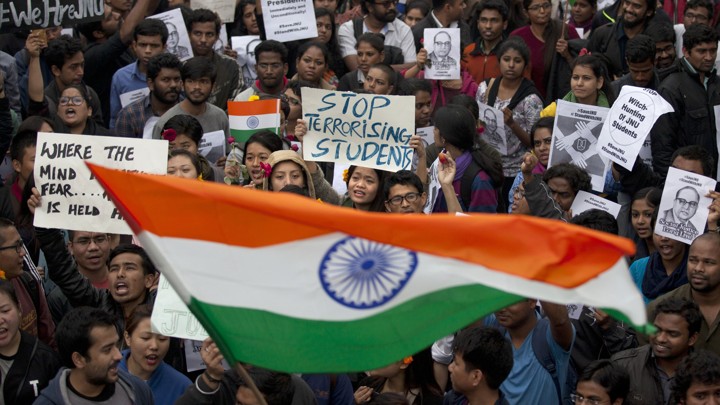
As we all know that no one is above Constitution in India. Whenever any person violates law and constitutional norms or does anything against the Country, he/she is not only arrested but given punishment. This act against nation comes under the ambit of Treason. We are listening to the term treason since British era. Britishers made law of treason for their own purpose. This act was made punishable under section 124A of Indian Penal Code. Britishers had misused this law to arrest freedom fighters and nationalists. Because of this misuse, this law has been questioned many times. Even after independence, there were voices for and against this law.
Even today this law has punishments and provisions made by Britishers. So whenever any matter of Treason comes, the efficiency of law is questioned. Those who are against this law often say that this law is misused by the Government and this law contradicts the freedom of speech. On the other side Government's stand is very clear. It is, this law is required to act against terrorism, separatism and to stop anti national movements. Section 124A of IPC came into existence in 1870. This question is always raised that after so many years of independence why this law is required. Experts of law has said that in Constitution, Freedom of Speech is not absolute right. It is right with certain restriction that is why this Treason law is not required at present. In IPC also there is already punishment for hate speech, etc. then is Draconian law is not at all required. Supreme Court has also said that if anyone says something against the Government then he/she should not be punished under section 124A.
The definition of Treason is very vast and that is why there are chances that this law may be misused. To make sure justice is delivered there is provision under section 196 Cr.P.C which says that police has to take permission from Central or State Government in order to proceed with the trial of Treason case. No Court shall take cognizance of the matter until the permission from Central or State Government is granted.
History of Treason law:
In every form of Government, the voices against it is considered as an offence. In Ancient India this law was present. In Modern India this law came in codified form by Britishers. In 1837 the first Law Commission headed by Lord Macaulay proposed this law. Then it was drafted and under section 113 law against treason was made. When Indian Penal Code was drafted this law was not inserted in that. In 1870, Section 113 was removed and a new section 124A was inserted. This law was misused by Britishers against freedom fighters and time to time its scope was increased and many things were inserted into its ambit.
Supreme Court view on section 124A of IPC
Supreme Court has limited the scope of section 124A in the case of Kedar Nath Singh v. State of Bihar, 1962. Supreme Court has said that this section can be invoked only when the act of violence is caused or there is grave possibility that the act of violence may be caused. Supreme Court has also said that people have right to criticize the Government and its policy. This section cannot be invoked unless the means of violence is opted.
In 1995, Supreme Court in the case of Balwant Singh V. State of Punjab has said that section 124A cannot be invoked on the mere act of sloganeering by Public.



No comments:
Post a Comment