Friday, 6 December 2019

Citizenship Amendment Bill: The Government and Opponents' Own Arguments.

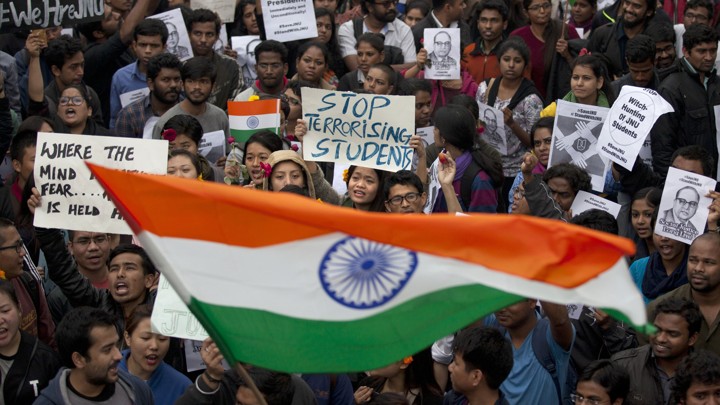
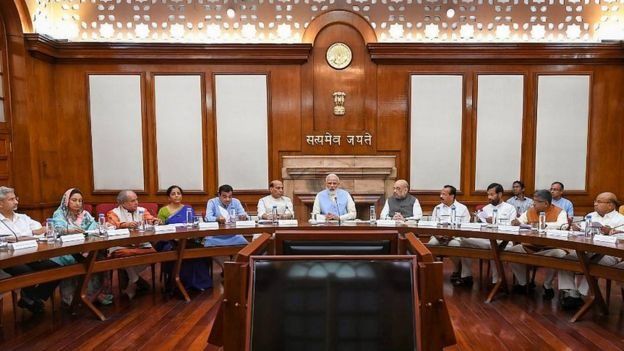
The Citizenship Amendment Act 2019 has taken the first step towards becoming a law, the cabinet has passed it, now it will reach the President's way through Parliament, after which the gazette will take the form of notification. Like the previous draft of the bill, opposition has also started this time. Many politicians are against this, questions are also being raised on its legal aspects. Opponents say that the cab cannot be seen separately from the NRC, while the government says that the two are separate subjects. 

What is the government saying?

Defence Minister Rajnath Singh said, "There has been continuous religious persecution of minorities in all the three neighbouring regions of India, due to which they have to take refuge in India. The decision to give citizenship rights to six minority groups is in the spirit of universal religion. Pakistan and Afghanistan are 'Islamic' republics. Secularism is included in the Preamble to the Constitution of Bangladesh, but Islam has been described as a national religion. The Modi government's bill provides for citizenship to six religious Hindus, Christians, Sikhs, Jains, Buddhists and Parsis who belong to Afghanistan, Pakistan and Bangladesh who have either entered India illegally Or, after coming here, their documents have expired. These people have come to India from these three countries because of religious persecution or for fear of happening. 

This will be applicable to those who have been living here before 31 December 2014. The country's Home Minister and the President of the Bhartiya Janta Party, Amit Shah, have also spoken about the crimes of minorities in the three neighbouring countries for conversion, harassment of their women, taking of girls and clarifying that such people Have taken refuge in India, this law will give them relief.

What did Amit Shah say?

Amit Shah, who is said to be the closest companion of Prime Minister Narendra Modi, had said in an interview given to Network18 that in the past seven times in India, citizenship has been given on a large scale. In this case, he cited the partition of India i.e. 1947, Bangladesh construction (1971), the return of citizens from Uganda to India, the civilians in Sri Lanka due to civil war, and the granting of citizenship to the Tamils ​​from that time. Nobody opposed it and when BJP wants to do the same, then why oppose it?

The Home Minister said that since Muslims cannot be accused in Islamic countries, the name of Muslims has not been taken in the bill. Amit Shah also said that the proposed citizenship law and National Register of Citizens i.e. NRC are different things. On the question that the agenda is being run against the Muslims under the guise of the bill and NRC, the BJP president said that which country in the world which does not take account of its citizens, then where is the talk of anti-Muslim in it  has come and those who are not Indians should go from here.

What are the arguments against the bill?

According to Hyderabad MP Asaduddin Owaisi, "The introduction of the Citizenship Amendment Bill is a disrespect to our freedom fighters as it will revive the principle of two nations. As a Muslim I rejected the principle of Jinnah. Now you remain a law That will remind people of two nations. "

Guwahati-based lawyer Aman Wadud says that the Citizenship Amendment Act and the NRC do not need to be read in separate slots, only then the whole matter becomes clear.
Aman Wadud, who has been fighting the case in favor of citizens for a long time in NRC case, says, "Citizenship of people in NRC is being investigated or will be done and those who are suspected will be excluded from it." He says, "But on the other hand you are saying that if you are from any one of these six religions, then there is a law for you which will give you citizenship. It is clear who you are targeting. They are Muslims. "

Many ministers of the Modi government and in recent times, even Home Minister Amit Shah have insisted that NRC will be prepared for the people of the entire country. Amit Shah has said that there will be NRC in Assam again. Important ministers of the ruling BJP government in Assam have refused to accept the recent NRC, whereas all this happened under the supervision of the Supreme Court. Reports so far have revealed that 19 lakh people whose names are outside Assam NRC have more Hindus. Famous writer, journalist Tony Joseph tweeted and wrote that the proposed law is similar to Hitler's Nazi scheme. Joseph says that the crookedness of this bill is understandable when you talk about NRC being done in the entire country. The CAB will give the government the right that it will be able to tell the people of one community only to prove that they are not illegal migrants.

Student activist Syed Azharuddin considers this to be part of BJP's 'Hindu vote-bank politics'. Opponents are also raising the question that if the matter is about the persecution of minorities in neighboring countries, then why are Sri Lanka, Myanmar and Tibet out of the bill, while Hindus, Muslims and Buddhists are accused of harassment in these countries too. Anas Tanveer questions who gave India the patron role of Hindus, Anas Tanveer, who advocates in the Supreme Court, says that the Citizenship Amendment Bill is a violation of the basic spirit of the Constitution - Preamble, besides laws like life, equality.

Rashtriya Janata Dal MP Manoj Jha has said that this step has been taken with the intention of making India like Israel - which aims to be a country for religious people (those who believe in one religion).

Sunday, 1 December 2019

Are there Global causes affecting Indian economy ?

GDP reached 4.5 percent in the current quarter, which is at the lowest level in the last six years. India's GDP was 5% of the previous quarter. Since the presentation of the budget in July this year, the government has taken several steps to bring the economy back on track. But on seeing the statistics related to the economy, the question arises whether the steps taken by the government are proving effective? During this time you will see that more than 30 such steps have been taken by the government. But the most discussed thing is the corporate tax cut. On 20 September, a reduction in corporate tax was announced. There are two levels of this tax reduction. There was talk of applying 22 percent rate to all companies, while the rate of 15 percent on new manufacturing companies was talked about. The biggest question arose whether the economy was benefited by this new cut or not.

Looking at the situation so far, it is known that due to that no new investment has come in India. But there is also a big reason behind this. It takes two-three months to see the effect of such a decision, sometimes even up to six months. If we look at the stock market, the super rich surcharge that was increased in the budget had a bad effect on the stock market. Later, the government withdrew this step but by then the stock market had suffered. The stock market did not recover from that situation very quickly. After that now the situation is being seen in the Indian stock market, the components within the country are not as responsible as the global economic situation.

Global causes affecting Indian economy

The situation of trade war between the USA and China has affected the economy of the whole world. This is the biggest reason for the Indian economy being affected. The second reason is that in Europe, America, all of Africa or all of Asia - somewhere in all the countries of the world the economy is lying sluggish. There is a situation of recession in many places. For the earning of any country, it is important that the goods manufactured in the country are sold. If our goods are sold outside the country, then we will earn. There is a double hit on India - Goods are not sold in the domestic market even within India, and there is no one to buy our goods in the foreign market because the situation is bad there. These are the reasons which have affected the Indian economy to some extent.

Are there policy mistakes regarding the economy?

India has taken measures to increase investment so far. But it is also important that steps should be taken to increase consumption simultaneously. Economy is a vehicle that has two wheels i.e., invests and consumes. If the government increases investment but does not take steps to increase consumption, then it has some effect. Whether it is about the budget or after that, especially the matter of reduction in corporate tax - it was a big step to increase investment. To increase consumption, the government will need to reduce income tax.

If income tax is reduced, more money will come in the hands of people. With this, if people are assured that they do not have to worry and their jobs are safe, then people will start consuming. If consumption increases, the industry will be excited to invest more and make more goods. The one drawback in the entire system is that the government has not made arrangements to give more money in the hands of the people to increase consumption. If the government has done this, then the situation of the economy can be much better.

Friday, 29 November 2019

GDP 4.5%: How it became worst in 6 years ?

The last quarter GDP growth figure has arrived. The apprehensions have proved to be true. The rate of GDP growth has come down to four and a half percent. Shortly before, the news agency Reuters surveyed economists in which it was expected that the rate would fall below five percent. But they too had expected the figure to be up to 4.7 percent. Now the figure that has come is worse than this fear. This is the worst figure in the last six years, before that in 2013, between January and March this rate was at 4.3%. It is a matter of concern that this is the sixth consecutive quarter when the rate of GDP growth has come down. The most worrying news is that the growth rate of the industry has fallen from 6.7% to just half a percent. On the other hand, the rate of increase in agriculture or agriculture sector has come down from 4.9 to 2.1% and the rate of services has also fallen from 7.3% to 6.8.

How to understand GDP ?

GDP is a gross domestic product.But this means that whatever is being made all over the country, whoever is earning as much as possible, the total sum of all that. And the calculation of earnings is not easy, so here is an easy way to calculate, to calculate expenses. The total expenditure incurred on buying anything is the GDP of the country.

The increase in it is called the GDP growth rate and from that it seems that the rate at which the country is progressing. At the same time, the figure of how much GDP is made above the capita GDP i.e. a person in the country is also released. And if this capita or per capita data remains below, then it directly means that the citizens of the country are in trouble, their needs are getting difficult or their needs are not being met.

While this figure is high, it means better life of citizens. It is not necessary that it does not mean poverty or hunger in the country, because it is average. On average, the capita GDP of America is around 55 thousand dollars, but even there, about ten percent of the people are unable to make arrangements to feed.

What a disturbing statistic !

India's per capita GDP in March this year was $2041, which was about one lakh forty-six thousand rupees. Many people are still raising families in a city like Mumbai on such an annual income.

But this is average. It also means that a lot of people are earning thousands or millions of times from it, and a large part of the country's population is not able to get even one-tenth of it.

The quarterly figure of GDP is also a matter of concern that in the last one and a half years, it has reached there by falling, which is the weakest figure of the last six years. Along with this, the other big concern is that the situation is not likely to improve at the moment.

Most economists believe that this time the increase in decline means that it is difficult to improve for the whole year. That is, they are seeing a decline in the pace of progress for the entire financial year. This too when the government has taken many steps to improve it.

The government is aiming to create a five trillion dollar economy. It is only by calculating the calculator that the GDP growth rate for it should be above 12 percent. For the last ten years, India has been dreaming of 10 percent growth, and has generally been growing between seven and eight percent annually. Last year, the rate has fallen by almost seven percent. But now if it falls further, it is a symptom of serious trouble.

The symptom of trouble is also because the fastest decline is visible in expenses. That too in the expenses of the common man is called consumer spending. That is, people are not buying goods, people are cutting expenses and thinking of the money they have or spending more.

The effect of this is that if there is no expenditure, then the goods will not be sold. If not, the traders and companies who make it will sell. He is in difficulty and his staff is in trouble. People's salary will not increase. Maybe, not even the mills, and there is a fear of going to the job. Many people have lost their jobs. Such news is coming from all around. This means that people do not have confidence in their own progress.

So far all that the government has done is on the path that loans from banks arise, money should come into the system, business should be fast and growth will increase.

But getting loan cheaper is not the cure for this problem. Finance Minister Nirmala Sitharaman says that there is no recession in the country. From the theory of economics, she can be right that by definition it is not a state of slowdown or contraction. But what is called slow down in English will also be called recession in Hindi. And the Finance Minister himself has admitted that there is probably a slowdown.

Way Forward:

Now the question is what is the treatment of this slowdown. How will this trust come in the mind of the consumer that he should put his hand in his pocket and spend money by withdrawing money. There is only one way. The boom in the job market.

When people will see that they have a job in their hands and two offers in front, then this excitement arises in their mind that they start thinking of spending before earning.

Scholars have many suggestions for how this situation will come. But at this time, a problem of the government is also visible that the suggestions that come up should be tried out. This path does not follow. Even if the stock market runs, it is difficult to keep the economy going.

Right now, the new scholars who have joined the Economic Advisory Council have a lot of experience and some very effective suggestions. The government will at least have to heed the advice of these people.

Former Prime Minister Dr. Manmohan Singh had expressed apprehension that with the demonetisation, the GDP growth rate may fall by one and a half percent. Now that this seems to be true, at least talking to them can cure the disease.

But after the latest data comes out, it can be said that instead of getting entangled in the technical definition of recession and the jargon of relapse or slowdown, the government should now seriously consider that the situation is very bad, and to recover from this situation Forgetting the distinction of parties, there should be a move towards taking everyone along and taking measures at war level.

Thursday, 28 November 2019

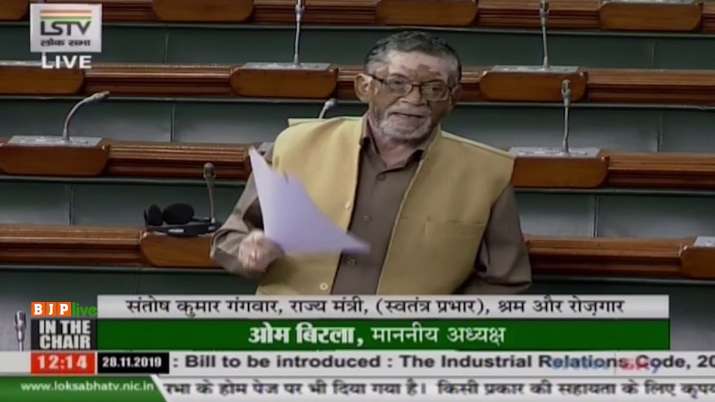
The Industrial Relations Code Bill, 2019 was introduced in the Lok Sabha today.

The Minister of State (Independent Charge) for Labour and Employment, Shri Santosh Kumar Gangwar introduced the Industrial Relations Code Bill, 2019 in the Lok Sabha today.

Earlier, opposing the introduction of the bill, RSP KNK Premachandran, Trinamool Congress's Saugata Roy and Congress's Adhir Ranjan Chowdhary, calling the said code anti-employee, demanded the government to send it to the Parliamentary Standing Committee on Labour, said that it has not  consulted the states. Sowat Rai said that no labour organization had demanded this code and said Industry organizations wanted, so the government has brought it on its own. Describing it as 'anti-labor', he said that it should be sent to the Standing Committee on Labour. Chaudhary also demanded to send it to the Standing Committee stating it as 'anti-labor'.

Minister of State for Parliamentary Affairs Arjun Ram Meghwal said that the members have not given any single reason to prove that there is no legislative authority to bring the bill to this house. K. Subbarayan and CPI-M's Abdul Majeed Arif and S. Venkatesan also sought permission to speak in opposition to the introduction of the bill, but the Lok Sabha Speaker said that notices had not been given in the past. Members can elaborate during the discussion. Left not allowed to speak, members of the Left walked out of the House. Gangwar said that the government has brought the Industrial Relations Code after long discussion and consultation with labor organizations and all state governments. There is no provision against the rights of workers. He then introduced the 'Industrial Relations Code, 2019' in the House.

While presenting the bill, Mr. Gangwar said that this code has been prepared after extensive consultation with representatives of trade unions, employee organizations and state governments. The Bill aims to consolidate and amend the laws relating to the service conditions of employment in trade unions, industrial establishments or undertakings and the investigation and settlement of industrial disputes. The draft Industrial Relations Code is governed by these three Central Labour Acts like the Trade Union Act, 1926; The merger, simplification and rationalization of the relevant provisions of the Industrial Employment (Standing Order) Act, 1946 and the Industrial Disputes Act, 1947 have been prepared. The Union Cabinet approved the Code of Industrial Relations, 2019 on 20 November 2019.

Benefits :

A concept has been introduced through the formation of a two-member tribunal (in place of one member), which will jointly adjudicate on some important matters, while the remaining cases will be adjudicated by a single member. 
There will be flexibility in the 'exit' provisions (relating to lay-offs, etc.), under which the initial limit required for prior approval of the appropriate government has been kept unchanged at the level of 100 employees. 
However, a provision has also been added to it, under which 'such number of employees' can be changed through notification. Reskilling fund, which will be used to lend to workers in a manner that is yet to be determined. 
Definition of fixed-term employment. There would be no notice period under it and excluding compensation on lay-offs. Government officials will be empowered to adjudicate on disputes related to penalties as fines, reducing the tribunal's workload.

Tuesday, 26 November 2019

How President's rule in Maharashtra ended without cabinet meeting ?

For weeks after the assembly election results, there was a tussle between BJP, Congress, Shiv Sena and NCP for power in Maharashtra. The BJP, which had emerged as the single largest party, could not stake claim to form the government due to unease over power-sharing with its former ally Shiv Sena. Since all parties failed to prove majority, President's rule was imposed on November 12, 2019. On the night of 22 November, there were reports that a coalition of Shiv Sena, NCP and Congress would soon form the government. However, the next day everyone got a shock when the BJP formed the government, claiming the support of NCP MLAs. President's rule was repealed under Rule 12 of the Government of India (Transaction of Business) 1961 at 5:47 am, just hours before the oath ceremony. The provision that was used by the Prime Minister to repeal President's rule is Rule 12 of the Government of India (Transaction of Business) 1961. This provision states: "Rule 12 of the Government of India (Transaction of Business) 1961 gives the Prime Minister the right to allow or ignore deviations from the rules to the extent necessary to settle a situation of excessive urgency or unexpected contingency in a particular case. Even in such situations, the process of trial and inter-ministerial consultation has to be followed. All the cases are mandatory under Rule 12 Must be forwarded through the Cabinet Secretary and sent directly to the Prime Minister in any case. The following guidelines are required to be followed in cases necessary for Rule 12 to be implemented:

A) Proposals only Administrative Ministry / To be extended by the Department, which will be related to the subject of Government of India (Allocation of Business) Rules, 1961. 

B) A detailed justification in the proposals It must clearly state the urgency and exceptional circumstances involved in the case, which need to be processed under Rule 12, as well as a statement explaining the reasons why the proposal received the approval of the competent authority in time. Why can't it be processed. 

C) The Secretary of the Department / Ministry shall ensure that all requirements including inter-ministerial consultation are met before submission of proposals for approval under this rule. This fact has to be mentioned in the proposal submitted for approval under Rule 12

 D) The concerned Ministries / Departments in all matters, the Minister in-charge, Finance Minister in matters related to the outflow of funds, and the Minister concerned, whose work involves the subject, approved the proposal through Cabinet Secretary. 

 The origin of the provision is in Article 77 of the Indian Constitution titled "Conduct of the work of the Government of India". This shows that under this article work has been set by the Government of India in relation to its businesses. Clause 3 of the said article states that "The President shall make rules for the more convenient transaction of business of the Government of India and the allocation among the ministers of the said business". The Government of India (Transaction of Business) Rules 1961 has been made under Article 77 (3). The power to make rules of business can be ascertained under the said rule in Article 53, which states that the executive power of the Union shall be exercised directly by the President or by his subordinate officers in accordance with the Constitution and Article 74 (1), Under which they are required to discharge their functions with the help and advice of the Council of Ministers. This means that the decisions of the Government of India are not always taken personally by the President. Decisions can be taken by the concerned minister or authorized officer under the rules of business decided by the President under Article 77 (3). It has been said in many cases that if all decisions are taken by the President or even by the Ministers, then the functioning of the government will stop. 

Article 77 (3) of the Constitution makes two provisions for better administration: 1. Empower the President to implement the rules of transactions for the smooth conduct of government business; 2) The rules made under provision (1) of allocation of the said business among ministers are the rules of business relating to administration. Authorized officers under these rules are able to take decisions on behalf of the ministers concerned. The minister has control of the overall business undertaken by the department, but in practice most decisions are taken by authorized officials. The work is approved through the signature of the minister. A full reading of the rules in the draft rules giving the Prime Minister special powers will make it clear that the rules are mostly related to the operation of ministries. It prescribes rules for efficient functioning within the Ministry for better administration and redress of issues. It is also involved in matters of the second schedule which require the approval of the Cabinet, e.g., issues of ordinances, cases where differences of opinion arise between two or more, desired decisions of the Cabinet, by the Cabinet in the past.

On one of these rules, Rule 12 of the TOB states: Rule 12 states: "Deviations from the rules — the Prime Minister in any case or classes of cases, the Prime Minister, to the extent necessary, to allow or ignore deviations from the rules. Can give orders. The sentence "to the extent necessary" is the discretion of the Prime Minister. These are the conditions of excessive urgency or unexpected contingency in a particular case to the Prime Minister. Gives the right to allow or ignore deviations from the rules to the extent necessary for the disposal of the Act. In the case of Maharashtra, the Governor shall act in accordance with the advice of the Council of Ministers under Article 163 (2) in the absence of any Government.  Therefore, the Governor's report According to, President's rule was implemented in Maharashtra. The proposal was to be sent by the Union Cabinet to repeal President's rule in Maharashtra. However, the Central Government by passed the requirement of a Cabinet meeting to be held before the President's rule was withdrawn. Exercised special power under Rule 12 of the TOB, 1961.

Monday, 25 November 2019

Maharashtra floor test: Supreme court will pronounce verdict on Tuesday

The Supreme Court reserved its verdict till Tuesday after hearing the arguments of all the parties on Monday for the second consecutive day on a petition filed by the Shiv Sena, NCP and Congress against the Governor's decision to invite the BJP to form the government in Maharashtra. The Supreme Court will pronounce its decision in this case at 10.30 am on Tuesday. A three-judge bench of the Supreme Court of Justices NV Ramana, Ashok Bhushan and Sanjeev Khanna heard the case for the second consecutive day on Monday. In a special hearing on Sunday, the court had directed the Center to produce documents of correspondence between Fadnavis and the Governor of Maharashtra at 10.30 am on Monday. The Solicitor General told the court that he had submitted both the letters to the court - one by Devendra Fadnavis to show support to the Governor and claim to form the government and another by the Governor to invite him to form the government. The SG said that in a letter submitted to the Governor on November 22 by NCP leader Ajit Pawar, he promised the support of the entire 54 MLAs of the Nationalist Congress Party. The letter mentioned that Pawar was the head of the NCP  Party. 

The SG read the letter sent to the Governor by Fadnavis, acknowledging that he had the support of 170 MLAs including 54 NCP MLAs. SG Mehta said, "The Governor acted before them on the basis of material. The court cannot question their discretion." He made it clear at the outset that he was appearing for the Governor's Secretary, as the Governor could not be called as a party in judicial proceedings. Earlier on Sunday, the Supreme Court, while hearing on Sunday, had directed the Central Government to present a letter of support given to the Governor in the Supreme Court. The Supreme Court on Sunday directed the Central Government to present the letter of support in the court at 10.30 am on Monday, on the basis of which the Governor of Maharashtra decided to invite BJP to form the government. 

Solicitor General Mehta's 3 main arguments:

Solicitor General Tushar Mehta handed over the letter of Maharashtra Governor Bhagat Singh Koshyari and Chief Minister Devendra Fadnavis to the Supreme Court.

On floor test: Tushar Mehta asked whether the decision of the Governor can be challenged in any petition under Article 32? The Governor waited till 9 November. When asked by the Shiv Sena on the 10th, it refused to form the government. On 11 November, NCP also refused. Subsequently, President's rule was imposed.

On the credibility of Ajit's letter of support: The letter to the Governor of Ajit Pawar had the signature of 54 MLAs. Ajit had described himself as the leader of the NCP  Party in the letter. The governor did not need to examine the letter he had received. The decision to call Fadnavis for government formation was taken on the basis of the documents placed before him.

On opposition's demand for early assembly session: Of course floor test is the best, but no party can say that floor test should be done within 24 hours. Give us two or three days to file the reply. Pro-tem cannot interfere in assembly processes like election of speaker. The court cannot ask the governor to conduct a floor test within 24 hours. The Governor has given 14 days for this. It should be 7 days justified.

4 major arguments of Fadnavis's lawyer Rohatgi:

On government formation: Mukul Rohatgi said- Shiv Sena, which was with BJP in alliance before the election, left after the results. Subsequently, President's rule was imposed. Fadnavis later received a letter of support from the NCP. So he went to the Governor with the support of 170 MLAs. President's rule was lifted and Fadnavis was sworn in.

On NCP break: One Pawar (Ajit) is with us, one (Sharad) is with the opposition. There must have been some family dispute between them. It was not a matter of concern for us. On the allegation of misuse of MLA's letter: The current case is different from the Karnataka case of 2018. Here all the documents showing majority before the Governor were present. No one is saying that there was a mess with the signatures of the MLAs. The Governor gave all parties a chance. They made sensible decisions through the documents before them.

On the question of the court proving majority: Justice Khanna asked- Can Fadnavis prove majority today. Rohatgi said- The question is whether the court can give any interim order in this case. Can the court ask for a floor test in a given period of time. Not according to me. Rohatgi asked the court not to do a judicial review of the decision of Governor Bhagat Singh Koshyari.

Shiv Sena lawyer Sibal's 2 major arguments

On imposing President's rule: Kapil Sibal said- What was the National Emergency to remove President's rule at 5:17 am and administer oath at 8 am? President's rule removed at 5:17 am. It means that everything was settled before 5:17 am.

On floor test: Floor test should be done in 24 hours in assembly. A senior member of the House completed it with a single ballot and videography. All happened in the dark of night. New opportunities are knocking at the door. Allow floor test to take place in daylight.

Sunday, 24 November 2019

Petition approved in Supreme Court, hearing against the Governor's decision will be held tomorrow at 11:30 am

The Shiv Sena has filed a petition in the Supreme Court against Devendra Fadnavis taking oath as Maharashtra CM and Ajit Pawar as deputy CM. NCP leader Dhananjay Munde reached YV Chavan Center for NCP meeting. NCP is to meet here. Earlier, Dhananjay Munde appeared with Ajit Pawar this morning. On Saturday morning, there was a big upsurge in the politics of Maharashtra. Devendra Fandavis took oath as CM, and Ajit Pawar as Deputy CM. This whole incident happened at a time when the NCP Congress and Shiv Sena had agreed to form a government in the state. BJP leader Sudhir Mungantiwar said the BJP has the support of 170 MLAs in the 288-member House.

Present the letter of support in the court, on which the governor invited to form the government, the Supreme Court directs the Center. In an urgent hearing on the legality of the formation of the Maharashtra government, the Supreme Court on Sunday directed the Central Government to present the letter of support to the court on Monday at 10.30 am, on the basis of which the Governor of Maharashtra invited the BJP to form the government.

 A Bench of Justices NV Ramana, Ashok Bhushan and Sanjeev Khanna ordered: "The issue is that the Governor's decision to invite him to form the government on 23/11/19 is unconstitutional. On this issue, we Solicitor General Tushar Mehta Request that they present two letters by 10.30 am tomorrow. " A three-judge bench of Justices NV Ramana, Justice Ashok Bhushan and Justice Sanjiv Khanna heard the petition filed by the Governor in Maharashtra against inviting the BJP to form the government at 11.30 am on Sunday and issued notice to the Center to the Governor's letter Directed to appear before the court on Monday in which BJP was invited to form the government. At the same time, the Supreme Court has also asked to present the letter of Chief Minister Devendra Fandavis in which he claimed to prove majority. The Supreme Court will next hear the case at 11.30 am on Monday. In the Supreme Court, the Shiv Sena, NCP and Congress had filed a writ petition in the Supreme Court against the Governor's dramatic decision to invite the BJP to form the government in Maharashtra, hearing on which will continue on Monday.

Shiv Sena's argument Senior advocate Kapil Sibal, on behalf of Shiv Sena, argued that the Governor's invitation to the Bharatiya Janata Party to form the government is unconstitutional and there is no record of this action, everything was done in haste. Sibal also questioned the removal of President's rule from Maharashtra overnight. Sibal demanded the apex court to give both the parties a chance to prove their majority in the House at the earliest. On behalf of the BJP, Mukul Rahtogi said that political parties cannot directly come to the Supreme Court, they should have gone to the High Court first. Abhishek Manu Singhvi, while presenting the arguments on behalf of the NCP, said that Ajit Pawar is no longer the leader of the Legislature Party and has sent a letter to the Governor in this regard.

Saturday, 23 November 2019

Four "P" of Public Policy

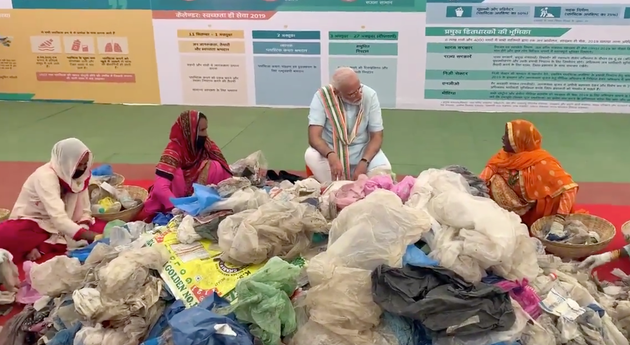
India became Open Defecation Free nation on October 2, 2019. In such a situation, it is an appropriate time to analyze how the Swachh Bharat Mission has become the global standard for participation and transformational development. Mahatma Gandhi dreamed of an India where no one has to face insult to defecate in the open. The work done by the country in the field of cleanliness in the last five years is an excellent tribute to Gandhiji. India, which had the highest number of open defecationers, is today leading the world in terms of cleanliness. Prime Minister tries to connect with people at ground level and understand their needs. The cleanliness revolution we are witnessing today is the result of his inspirational leadership. The world recognizes this, and the Goble Goalkeeper Award, given to Narendra Modi during his recent visit to America, reflects his decision to put cleanliness at the heart of India's development agenda.

The Swachh Bharat Mission Grameen Team has identified four important pillars of India's cleanliness revolution in the last five years which, together, can be applicable for any large-scale change in the world. A compilation of "Swachh Bharat Kranti" essays published by the Department of Drinking Water, Sanitation and Water Resources, has also followed, in a detailed way, the four-P structure, which is a successful journey of implementation of the flagship program.

The first "P" is related to political leadership ie political leadership. It is essentially a game changer for the Swachh Bharat Mission Grameen, under which the Prime Minister has introduced his personal political skills. Inspired by his leadership and commitment, various Chief Ministers contributed to this campaign, which had a wide impact. Its great influence from the Chief Secretary and Collectors to the grass roots Sarpanchs. About all levels leaders became major catalysts of scale change.

Second "P" is related to public financing i.e. government financing. Generally, no major change is possible without money. A provision of Rs 1 lakh crore was made to ensure everyone's access to sanitation facilities, which gave political support to the political mobilization. Nearly 90% of the 10 crore families to whom the toilets were provided were from socially and economically weaker sections and were provided financial assistance to build and use toilets.

The Third "P" is related  with mass partnership. The SBM-G emphasized partnerships between both the actors and the motivators, including national and international level development agencies, media, civil society, celebrities and all the departments / ministries of the Government of India, in their respective fields. With the cooperation of all, this policy made cleanliness the goal of every person, making this campaign a main part of national consciousness.

The fourth "P" i.e. People's Partnership is related with public participation. The SBM -G trained over five lakhs autonomous, grassroots motivators who accelerated the transformation of the practice in every village in India. Ordinary people played an extraordinary role and inspired others to build and use toilet. Success stories of cleanliness champions came from every nook and corner of the country. Change in scale can actually be successful if it is embedded in people's imagination and thus it can become a mass movement.

Wednesday, 13 November 2019

The Economy of Cleanliness and Dignity of Cleaners

Cleanliness emerged as economy: Recently in India, cleanliness emerged as important sector in terms of economy with huge potential. Cleanliness Economy does not mean to create toilets only rather it includes availability of clean drinking water, disposal of garbage and to convert that into useful resources. Along with economy, cleanliness in itself  has become a matter related with health, consuming goods, agriculture, new and innovative energy which can play an important role in creating employment in India as well as in World. In India, many things have contributed toward cleanliness economy like Swachh Bharat Mission, Jat shakti Abhiyan and ban on single use of plastic. These missions have vision to provide fundamental cleanliness in the country and to provide clean drinking water in every village by way of pipelines. According to report of Toilet Board Coalition, it is estimated that in India 32 Million Dollar  has been spent in 2017 in making of toilets. In coming future our cleanliness economy will grow and this statistics is enough to corroborate this.

Dignity of Sweepers:
The cleaners or sweepers are the persons who play most important in making these visions successful but these workers especially Manual Scavengers are considered social stigma because of their work. To remove this social stigma there are many steps taken by the Government so that they can also live dignified life. 
(a) An end of manual scavenging Legal Protection to manual scavengers: Cleaners are categorised into two categories i.e., sweepers and manual scavengers. In this manual scavengers work in hazardous circumstances. While cleaning toilets, Septic tanks and railway tracks they have to go through  bad conditions in terms of health and safety. Legislature has enacted a law named " The Prohibition of Employment as Manual Scavengers and Their Rehabilitation Act, 2013" in order to remove this social stigma.
(b) Minimum wages, safe work environment and pension benefits: To fix minimum wages of cleaners, the Ministry of Labour and Employment had introduces Wage Bill Code 2019 which got assent of President on 8 August 2019. By this Wages Act 2019, cleaners will be benefited and their income level will also increase.
(c) Shelter, Education, Financial support: Rural Development Ministry under Indra Awas Yojana gives fund for construction of new house, repairing of old houses and funds for education of children of cleaners.
(d) Protection of cleaners by Ayushman Bharat Yojana: Prime Minister launched a policy in 2018 in order to improve living and health standards of cleaners and other underprivileged citizens. More than 10.74 crores people are beneficiaries of PMJAY and  under this policy Rupees 5 lakhs insurance policy is given.

Sunday, 10 November 2019

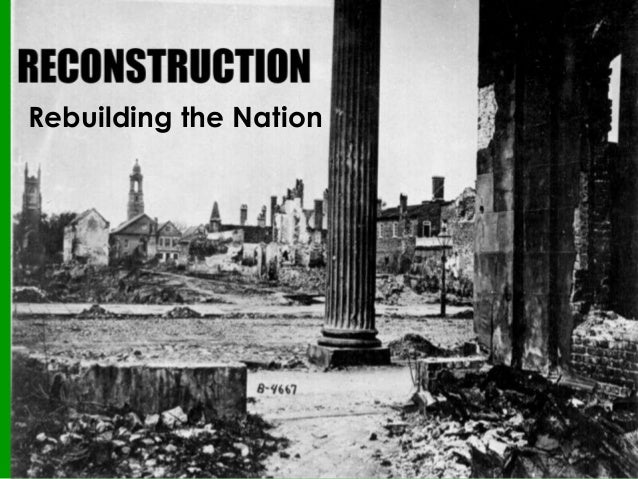
Path towards Reconstruction of the Nation

In many modern movement creative programs are overlooked. Still, there are some ways for reconstruction of the Nation and over all development of society.
1) Communal Unity: Peace and Communal harmony is backbone of any Nation and it is foundation of development. Dr. Rajendra Prasad had said: "It can be immediately believed that current communal partition is result of doubt and mistrust. It has poisoned  nation life in a manner that every thing like religion, language, culture, education, financial freedom and politics have come under the frame of doubt and corruption. Mutual belief will come only when we will stop imposing our belief on others irrespective of their will."
2) Elimination of Untouchability: Untouchability is the biggest form of systematic violence and it is show of toughness. In modern India the tradition of untouchability in its various parts is matter of shame. 
3) Village Industries: To engage Rural labour in Economic activities village industries play important role by which village economy constantly grows. 
4) Primary Education: Education is backbone of our culture. By way of education people will be aware of their rights, environment, use of natural resources, water management, agriculture, farming etc.,
5) Regional Language: There should be focused on regional language in education system. Students should be encouraged to study in their regional language. Our mindset to give priority to English language over our mother tongue has created a huge gap between common people and so called intellectual class of people.
6) Economic Similarity: Economic similarity is the key of nation building. True meaning of economic similarity is to curve the gap between rich and poor. The parameter of development should be in such a manner that every poor of the country becomes capable of basic needs. 
7) Student's Empowerment: Students are the future of country. They will be future politicians, industrialists, law makers, administrators. Unfortunately, there is no road map for overall development of students. In this technical world, they have shifted towards online sources and human communication has changed into online mode of communication. It is required to centralize the attraction of youth towards social and economic development of nation. 

Saturday, 26 October 2019

An accreditation for sustainable development

The true meaning of sustainable development is comprehensive growth of human lives. This is a phase of development in which present needs should be fulfilled, future generation can also full fill their needs and in this process our ecosystem also remain healthy and sustained. There are many definitions of sustainable development given by social activists, the essence is the idea of development should be conscious use of our natural resources in order to save the resources for future use. The seed of destruction is contained in modern urbanization. We need to control our greed. The centre point of sustainable development should be to full fill fundamental necessities only. Our social activists have guessed very earlier  that rapid urbanization will have serious effect on nature especially adverse effect on our ecosystem, side effects because of blind harness of water resource and biodiversity. Because of so called development, economic disparity has been risen. Nature as well as society has been imbalanced because of the huge gap between rich and poor. To fix this problem a new concept of development has risen called sustainable development in which every section of society is developed, comprehensive development of overall society and development should be extensive and permanent. 

What is sustainable development?
Many philosophers and activists have describes sustainable development but the most relevant definition was given by Brundtland commission in 1987 and it says: "development should be done in such a manner that the needs of present is fulfilled and that has no adverse effect on future availability of those resources." According to this commission sustainable development has three objectives : 1. Financial efficiency 2. Social acceptance 3. Environmental durability. In Brundtland commission report, many points are highlighted of development. According to it, the production system of development should honour environment. There should be a system to remove unbalanced growth. Economic growth should be in manner to fulfil fundamental necessities and less use of natural resources.

Sustainable Development and Environment: The adverse effect of rapid urbanization is imbalance in ecosystem. For the first time in 1972 there was talk on global level on the topic of protection of natural resources in Stockholm by United Nations and it was decided to take action immediately on this issue. Again in 1972, a journal named "Limits to Growth" was published by Club of Rome. It was said in the journal that if rapid economic growth is not balanced there will be serious effect on environment. 

Way Forward: In Agenda 21, guidelines have been issued on development without harming nature. In Rio Declaration 27 basic principles of sustainable development have been laid down. Paris Agreement, it was a treaty in which the party states will have to reduce use of carbo dioxide, methane etc harmful gas in order to save earth.

Friday, 25 October 2019

A approach towards criminology and forms of violence

The multiple level of violence from individual to community is one of the biggest problem today. In general violence is seen from 'codified law' point of view but legal dictionary limits the gravity of violence and defines it in terms of punishable offence with objective to stop it. Michel Foucault had said ''whatever we are seeing natural is not actually normal", by applying this logic on cause of violence we can say that violence prima facie appears  very clear and  self-contained accreditation but in reality violence is result of thought. In this context we can agree with Anastasia Stanko who said " violence is not definite, it is like this and it will remain like this". Despite this conceptual  problem  violence could be understood by classifications given by Johan Galtung. Galtung has said violence has three types: Evident, Structural and Cultural.

Evident form of violence:
There is no limit of violence and at last this ends with abstinence. The reason for this is at time of making decision of wrong and right, violence comes in favour of right and conclusion comes with decision whom should be punished and who should be freed. When this form of violence is used it takes shape of institutional mechanism and is used for solution of any problem. Evident form of violence is seen in contemporary society and politics when the feeling of hate rises for greed.

Structural form of violence:
In modern world structural violence could be seen as centralization of power, industrialization and exploitation of certain class of people. Philosophers have termed this violence as structural violence. This is violation of principles of human morality which contemporary society is trying to overlook. Political and economic centralization is also form of structural violence and to curb two step should be taken immediately: 1) Decentralization of polity (i.e., Gram panchayat) and economy (i.e., Gram Swaraj). The purpose of this is to remove exploitation and make society free from structural violence. This leadership does not mean to impose any thought on others but make balance between development and voice of common people.

Cultural form of violence:
In contemporary world there are many dimensions of violence in which one from is exploitation. This kind of multi-dimensional violence impacts on specific class of people and then on overall society which has been seen in colonial times. This gives sign of Psychological, Linguistic, sociopolitical and economic violence which impacts overall society. Cultural violence is not evident but it is present under framework and systems of society. This turn out when any political, religious warfare comes into picture like terrorism.

Tuesday, 22 October 2019

Human made problem

As we know that humanity is going through crucial phase. It has facing serious problem regarding its existence. The present era which also known as society of literate, here with the help of internet people are sharing information and uncovering many unknown facts. Despite all these things which have made our lives easy, human beings are unconsciously facing problem daily of which they have no idea. Its consequence may shock them.
According to scientist Michio Kaku, the development of Quantum Mechanics, Bio-Genetics and Artificial Intelligence have changed human lives dramatically. But the scientist is not sure about the future effects of these developments.
However, according to Astrophysics this universe is continuously growing but the same is denied by many scientists. One possibility could be foreseen that this Universe will be destroyed either by "Big Crunch(a process in which this universe will be destroyed by fire) " or by "Big Chill (a process in which this universe will be destroyed by cold)". The theory of Quantum Physics supports that this Universe will be destroyed one day. This theory talks about fourth face of science which includes change in Space-Time Continuum, spreading of Microscopic illusion which connects multiple universe and to create path in between those illusions to escape before this universe collapse. These all are 1000 years afterwards future possibility but common people are only worried about those problems which they are facing in present because that has direct impact on their daily lives.

It is very clear that whatever problem we are facing could be termed as human made problem because it is result of our excessive use of natural resources. As we know that human standard has changed drastically after scientific development. Our approach towards everything changed in scientific manner. Example, earlier people used to consider this earth and birth of human as blessings of Devine power but now it has become a place for exploitation and experiments.
This newly developed science has changed the view of people and people have adopted Utilitarian point of view. Earth is now considered as a big machine and it is meant for consumption of material resources. Humans by way of science and technology trying to dominate and control the earth. The definition and purpose of life has changed towards materialistic approach. This has taken place of spirituality and humanity. Traditionally Knowledge which was used to help others now has become tool to show power and to establish  suzerainty.

Friday, 18 October 2019

Corporate Social Responsibility and Gandhian View

Corporate Social Responsibility (CSR) has become fundamental principle of Corporate world and Government. It is presumption of common people and companies that Government by making law to spend 2% of profit of companies, forcing companies to work for social development and this step is enough to ensure social responsibilities of  companies. In nutshell this is called CSR. By merely making law on this point it does not satisfy the view of Gandhi ji. His view on Trusteeship is very different from what is being followed today. Gandhi ji was well aware of the social responsibility of corporate people and how they can play role in nation building and reconciliation in societies by way of non-violence. 
On June 29, 1919 Gandhi ji while inaugurating the orphanage named Vinita Ashram in Ahmedabad, Gujarat said : "It is alleged everywhere that in Ahmedabad people are money centric and commercial ageing but I don't feel bad about this. Apart from commercial ageing, knowledge, devotion to society, social responsibility are important character which must be present in every human being. Corporates are the person who gives money for country in various forms. A true corporate should not hesitate in giving his all money for nation building. He should run his business with this feeling only. The nationalist feeling cannot come without the feeling of Spiritualism which means if anyone is underprivileged then it is our responsibility to come forward and help him".

The concept of Trusteeship was born in 1990 to get rid of communism and capitalism. The era of communism was almost come to an end. It seemed that capitalism is the only option for social development. To create balance and remove monopoly the concept of trusteeship was developed. 

Business and Trusteeship:
The fundamental of trusteeship is, how to make money and to what extent. Trusteeship is not against ownership of business or creation of money. In the concept of trusteeship, creation of money and ownership is very well-balanced. When this concept was developed there were protest going on everywhere between the labours and owners. At that time Labour Union had strong base not only in India but all over the world. Many times Government and Labours were brought to negotiating table but Labour Unions were playing role of opposition. There was sense of rivalry between these two. At that time these corporates were asked to make their company trust so that the labours can also be benefited by the property of corporates for whom they are working. Reason being the property of corporates are result of hard work of labours.

Wednesday, 16 October 2019

New Innings of BCCI

The richest cricket board in the world, the Board of Control for Cricket in India will now be held by new team headed by former Indian Captain Sourav Ganguly who will take charge on 23rd October. For the first time in decades the awaited post of BCCI president is all set to be held by a former test player. The vice president's post would be held by Mahim Verma from Cricket association of Uttarakhand. Jay Shah, the son of Union Home Minister Amit Shah, will be new secretary of the board. A brand new BCCI team is taking guard for the first time in decades. The post of the BCCI president is all set to be held by former test player. 

Sourav Ganguly will be the only 2nd Indian captain to hold the position. However, the former Indian captain is not new to Cricket administration. The 47 years old has been President of Cricket Association of Bengal since 2015. He was part of Bengal Cricket Association's working committee in 2012-13. He was also part of IPL Governing council and head of BCCI's Techinal committee. 

Jay Shah, Son of Union Home Minister Amit Shah, will be secretary of BCCI. Jay Shah has been Joint Secretary of Gujarat Cricket Association since 2013. He is representative of Gujarat Cricket Association in BCCI.

LODHA PANEL:
The biggest controversy in the history of BCCI led to the formation of Lodha Panel. It was mandated by the Apex Court in January 2015. It was formed after the Mudgal report which detailed irregularity in the IPL and the BCCI after the spot fixing scandal. The panel headed by former Chief Justice of India RM Lodha and retired Supreme Court Judges Ashok Bhan & Raveendran imposed life ban on Gurunath Meiyappan and Raj Kundra. Further the panel suspended owners of two franchises for two years. The Lodha panel adviced BCCI to divide its governance into two parts i.e., cricketing and non-cricketing sections. Further the panel wanted BCCI to come under RTI Act.

Spot fixing Scandal:
On May 16, 2013; Delhi Police unveiled spot fixing and match fixing scams. On July 28, 2013; BCCI appointed 2 members probe panel which cleared India cements & Raj kundra. On 30 July 2013; Bombay High Court ruled against BCCI probe panel and declared it illegal. On October 7, 2013; Supreme Court appointed Justice Mudgal probe panel. On Febuary 10, 2014; Justice Mudgal probe panel submitted the report to Supreme Court and found Raj Kundra and Gurunath Meiyappan guilty of illegal betting in Cricket events.

How BCCI was formed?
BCCI was set up on 4 December 1928 by group of players at Delhi's Roshnara Club. It was registered under Tamil Nadu Societies Registration Act. Between 1940s-1960s, BCCI was mostly controlled by figures from princely states. In 1952, India recorded first Test victory against England in Madras. In 1983, India beat West Indies to lift world cup and BCCI emerged from shadows of England and Australia. In 1987, BCCI persuaded ICC to take World Cup out of England and India was allowed to jointly host the event with Pakistan.

Sunday, 13 October 2019

Ethiopian Prime Minister awarded with Nobel Peace Prize

The 2019 Nobel Prize announcement was made this week. The first prize in the category of physiology of medicines have been given to 3 scientists. The Nobel Prize of physics has also been announced for 3 scientists for their contribution to the understanding of evolution of universe. For chemistry as well, the Nobel Prize has been given to 3 scientists who have worked to develop an advanced Lithium-Ion battery. The Nobel Prize is widely recognised as prestigious award given for intellectual achievement across the world. Nobel Peace prize awarded to Ethiopian Prime Minister Abiy Ahmed Ali.


Ethiopian PM efforts towards peace:
Abiy Ahmed Ali pushed Ethiopia towards new democratic freedoms. He worked towards opening the country to outside world. He managed to end state of emergency, freed political prisoners and got Parliament to lift a terrorist ban on opposition groups. He pledged to facilitate foreign investment in key sectors of economy. He engaged in other peace & reconciliation processed in East and North-East Africa. In September 2018, his Government contributed in normalizing diplomatic ties between Eritrea & Djibouti. Additionally, he sought to mediate between Kenya & Somalia over rights to disputed marine area. Military regime & opposition in Sudan have returned to negotiating table and a joint draft was released of new constitution intended to secure peaceful transition.

2019 Nobel Medicine Prize: The 3 scientists named Peter Ratcliffe, William G Kaelin and DR. Gregg Semenza were independently awarded with prize. They have researched over the period of 2 decades that "how cells can sense and adapt to changing oxygen availability". It includes Genetic activity in response to varying oxygen levels.

2019 Nobel Prize in Chemistry: This prize is also awarded to 3 scientists namely John B. Goodenough, M. stanley Whittingham and Akira Yoshine for invention of lithium-ion battery.

Thursday, 10 October 2019

Indian Air Force Gets Rafale

Defence Minister Rajnath Singh ceremonially received the first Rafale Fighter Aircraft in France on Tuesday, 3 years after India singed an agreement with France to procure 36 such fighter jets. The Rafale fighter aircraft which entered service with the French Navy in the year 2004 will come to India with certain modifications for Indian Air Force. It has been categorized as 4.5 Generation aircraft for its radar evading strength profile. The Rafale aircraft is expected to be a game changer because most of the air crafts are either 3rd or 4th generation aircraft. India will be fourth country after France, Egypt and Qatar to fly the Rafale.

Indian Air Force Gets Rafale: India ordered 36 Rafale fighter jets from France in September 2016. The deal worth Rs. 59,000 crore. All Rafale jets are expected to arrive in India by September 2022. Indian Air Force has completed preparations to welcome Rafale. First squadron of Rafale to be deployed at Ambala Air Base. Second squadron to be stationed at Hasimara Base in West Bengal. Rafale jets will come with various India-specific modifications.

Specifications of Rafale: Israeli helmet-mounted displays, radar warning receivers, low band jammers, 10-hours flight data recording, infra-red search, tracking systems etc. Rafale can carry out all combat aviation missions to achieve air superiority and air defence, close air support, in-depth strikes, reconnaissance, anti-ship strikes, nuclear deterrence. The twin-jet fighter aircraft can operate from aircraft carrier and shore base.

Salient Features of Rafale: Rafale is twin-jet, canard-delta wing, multi role combat aircraft. It is designed and built by Dassault Aviation. It can carry wide range of weapons, capable of many shorts and long range missions. The aircraft has been fitted with onboard oxygen generation system. It carries out both air-to-air attacks, air-to-ground strikes  and interceptions in same sortie. It can also perform several actions simultaneously. Helmet mounted sights and targeting system give lightening quick ability to shoot off weapons. It has ability to take off from high attitude airbase on "cold start". It has radar warning receiver to identify hostile tracking system. 

Importance of Rafale in Indian Air Force: The Rafale fighter aircraft will enhance operational capability of Indian Air Force. Rafale aircraft has METEOR weapon which has visual range of air-to-air missile. It can take out enemy's aircraft over 100 km. Another one SCALP, a precision-long range ground attack missile. It can take out target with extreme accuracy. MICA, air-to-air BUR interception, combat & self-defence missiles. MICA can be used within visual range and beyond visual range.

Thursday, 26 September 2019

Narendra Modi: Global Goal Keeper

Prime Minister Narendra Modi on Wednesday received the Global Goal Keeper award 2019 instituted by Bill and Melinda Gates Foundation for his ambitious Swachh Bharat mission launched in year 2014. The award recognizes the Prime Minister for his goal to improve sanitation and bring positive transformation in lives of millions of people. Dedicating the award to 130 crore Indians, the Prime Minister credited them for transforming Swachh Bharat movement in people's movement. The Goal Keeper award is recognization of one of many goals the Prime Minster has tried to achieve for India by moulding and shaping public opinion. This process turned into mass movement in the last 5 years Modi said that record of 7 crore toilets were built. He also added that this mission has benefited poor people of India and Women. Stating that India has goal to achieve its sanitation target. The Swachh Bharat campaign was launched on October 2, 2014. It is World's largest behavioural change program. The World Health Organization has also acknowledged the mission that aims to accelerate efforts to achieve Universal sanitation.

Clean India has been the top priority of Prime Minister Narendra Modi. The Prime Minister asked people to join cleanliness drive and realize Mahatma Gandhi's dream of clean India. To make Swachh Bharat movement, Prime Minister launched social media platform. He nominated celebrities, leaders and public figures to become ambassador of campaign. The mission is very close in achieveing its goal of constructing toilets and ending the practice of open defecation. The Swachh Bharat mission now aims to ensure cleaner and healthier India in longer run. The campaign is now focusing on waste management.

While receiving the Global Goal Keeper award for Swachh Bharat mission, the Prime Minister addressed another key concern "The Complete Ban on Single Use Plastic" by 2022. From October 2, the Government has planned a mass movement to phase out single use plastic. Asserting India's leadership on climate issues, Prime Minister highlighted key points on India's robust action at UN Climate Summit action in New York inline with Global Goal and India's commitment. The Prime Minister's effort and India's leadership has been recognized and applauded on International platforms. India achieved Global fame when United Nations Secretary General Antonio Guterres presented Prime Minister Modi its  highest environmental honour "Champion of the Earth' Award" at special ceremony last year. PM Modi received the award jointly with Emmanuel Macron, the French President. The award was for Prime Minister's excellent effort to combat plastic pollution and his commitment to tackle climate change around the world.

Prime Minister Narendra Modi's effort has also been recognized for his International solar alliance initiative. It is a Global partnership that aims to scale up solar energy in solar resource rich countries and reduce humanities dependence on fossil fuels. India under the leadership of Prime Minister Modi signed Kigali Agreement in 2016 in Uganda. The agreement was also signed by 197 Nations with a goal of curbing the use of climate altering Hydro Fluoro Carbons.

Top Awards Conferred on Prime Minister Narendra Modi:

On August 25, 2019: PM Modi was conferred "King Hamad Order of the Renaissance" award in Bahrain.

On August 24, 2019: UAE conferred Modi "Order of Zayed" award .

On April 12, 2019: Russia honoured PM Modi "Order of St Andrew the Apostle" award.

On January 14, 2019: PM Modi was conferred First-Ever Philip Kotler Presidential Award.

On October 24, 2018: PM Modi awarded Seoul Peace Prize.

On September 26, 2018: PM Modi got UN's Champions of the Earth' award.

On February 10, 2018: Modi was conferred "Grand Collar of the State of Palestine" award.

On June 4, 2016: PM Modi awarded with "Amir Abdulla Khan" award of Afghanistan.

Saturday, 21 September 2019

Treason: Does India requires such law at present ?

As we all know that no one is above Constitution in India. Whenever any person violates law and constitutional norms or does anything against the Country, he/she is not only arrested but given punishment. This act against nation comes under the ambit of Treason. We are listening to the term treason since British era. Britishers made law of treason for their own purpose. This act was made punishable under section 124A of Indian Penal Code. Britishers had misused this law to arrest freedom fighters and nationalists. Because of this misuse, this law has been questioned many times. Even after independence, there were voices for and against this law. 

Even today this law has punishments and provisions made by Britishers. So whenever any matter of Treason comes, the efficiency of law is questioned. Those who are against this law often say that this law is misused by the Government and this law contradicts the freedom of speech. On the other side Government's stand is very clear. It is, this law is required to act against terrorism, separatism and to stop anti national movements. Section 124A of IPC came into existence in 1870. This question is always raised that after so many years of independence why this law is required. Experts of law has said that in Constitution, Freedom of Speech is not absolute right. It is right with certain restriction that is why this Treason law is not required at present. In IPC also there is already punishment for hate speech, etc. then is Draconian law is not at all required. Supreme Court has also said that if anyone says something against the Government then he/she should not be punished under section 124A. 

The definition of Treason is very vast and that is why there are chances that this law may be misused. To make sure justice is delivered there is provision under section 196 Cr.P.C which says that police has to take permission from Central or State Government in order to proceed with the trial of Treason case. No Court shall take cognizance of the matter until the permission from Central or State Government is granted.

History of Treason law:
In every form of Government, the voices against it is considered as an offence. In Ancient India this law was present. In Modern India this law came in codified form by Britishers. In 1837 the first Law Commission headed by Lord Macaulay proposed this law. Then it was drafted and under section 113 law against treason was made. When Indian Penal Code was drafted this law was not inserted in that. In 1870, Section 113 was removed and a new section 124A was inserted. This law was misused by Britishers against freedom fighters and time to time its scope was increased and many things were inserted into its ambit.

Supreme Court view on section 124A of IPC
Supreme Court has limited the scope of section 124A in the case of Kedar Nath Singh v. State of Bihar, 1962. Supreme Court has said that this section can be invoked only when the act of violence is caused or there is grave possibility that the act of violence may be caused. Supreme Court has also said that people have right to criticize the Government  and its policy. This section cannot be invoked unless the means of violence is opted.

In 1995, Supreme Court in the case of Balwant Singh V. State of Punjab has said that section 124A cannot be invoked on the mere act of sloganeering by Public. 

Tuesday, 17 September 2019

Standing Committees of Parliament

In a democratic country, the work of Legislature is very important. In 90s, Standing Committees was established for effective and smooth functioning of the Parliament. These committees plays excellent role in organising the work of legislature in effective manner. These Standing Committees can be called Mini Parliament and their work is dedicated to harness the gap between common people and the Government. These committees check the laws made by Parliament and if required suggest necessary changes in that law. These committees takes public opinion into consideration as well as the advices of expert. They make sure that law should not have any adverse effect on the society. Recently new Standing Committees are set up and Members of the Parliament have been assigned new responsibilities. On September 13, 2019 Lok Sabha Secretariat has notified all 24 Committees of the new changes. BJP MPs have been assigned responsibility of 13 Committees and Congress MPs have been assigned responsibility of 3 Committees. These committees are supposed to keep an eye on the work of executive and to reduce the excessive work load of the Legislature. Anti Defection laws are not applied on these committees. This is reason behind the independent working of these committees. These committees are expected to work above party politics. Standing Committees were established in 1993. The tenure of Head of each committee is 1 year. Lok Sabha has 16 Standing Committees and Rajya Sabha has 8 Standing Committees. Till 13th Lok Sabha there were 45 members in which 30 were from Lok Sabha and 15 were from Rajya Sabha. In 2004, this structure was changed and total number of members was 31. In this 21 were from Lok Sabha and 10 were from Rajya Sabha. At present total number of Standing Committees are 24 in which 16 members are appointed from Lok Sabha and 8 members are appointed from Rajya Sabha. Lok Sabha Standing committee members are appointed by Speaker of Lok sabha and members of Rajya Sabha Standing Committee are appointed by Chairman of Rajya Sabha.

Financial Committees:
There are 3 types of Financial Committees namely Estimate Committee, Public Accounts Committee and Committee on Public Sector Undertakings.

Estimate Committee: In Estimate Committee there are 30 members. All members of the committee are Lok Sabha MPs. The tenure of the committee is 1 year. This committee works on effectiveness of policy and the areas where Government need to spend money.

Public Accounts Committee: In Public Accounts Committee total number of members are 22 in which 15 are from Lok Sabha and 7 from Rajya Sabha. The tenure of this committee is 1 year. From 1967, there is tradition to appoint leader from opposition to be head of this committee. This committee works on the report of Comptroller and Auditor General of India.

Committee on Public Sector Undertakings: This committee also has 22 members, 15 from Lok Sabha and 7 from Rajya Sabha. The tenure of this committee is 1 year. The head of the committee is appointed on advice of Speaker of Lok Sabha. This committee work on the functioning of Government Companies.

There are some special committees formed from time to time for specific purpose. These committees are known as Ad Hoc Committees. These committees comes into existence by special motion and subsequently dissolved when work is done. This is not permanent Committee.